Compliant documentation, minus the bullshit.
A comprehensive clinical documentation system for your entire team that's compliant as fuck.
Because “I hope my therapists are documenting correctly” isn't a compliance strategy.
Give your entire clinical team access to rock solid documentation resources designed to support consistent, compliant, and defensible documentation across your practice. Less guesswork, more confidence, and a whole lot less anxiety about insurance audits.

PROTECT YOUR PRACTICE
Support defensible clinical records and feel more prepared for insurance audits
STANDARDIZE DOCUMENTATION
Give your entire team the same documentation framework built around Medicare standards
STAY UP TO DATE
Access resources updated as applicable federal Medicare documentation standards evolve.
The Clinical Documentation Template Library!
Everything your practice needs to make compliant documentation the standard across your entire clinical team.

You worked your ass off to build your practice. The last thing you need is to find out during an insurance audit that half your clinical team has been documenting incorrectly.
The Clinical Documentation Template Library gives your entire practice a shared framework for understanding and applying documentation requirements, so you're not left wondering whether your therapists' clinical records will hold up under scrutiny.
Less hoping for the best. More knowing you've given your team the tools to document compliantly, consistently, and defensibly.
The Clinical Documentation Template Library equips your entire team with extensive, fill-in-the-blank clinical language for every major document throughout the course of treatment, alongside comprehensive compliance checklists that break down documentation requirements and completed examples that show exactly how it all comes together.
Every resource is designed to help clinicians understand documentation requirements, establish medical necessity, support clinical decision-making, and maintain clear, consistent, and defensible records from beginning to end.
Less time figuring out how to document the clinical work. More confidence that your entire team is documenting it correctly.
What's Included in the Clinical Documentation Template Library?
From the initial diagnostic assessment to the final discharge summary, we've got your documentation covered.

-
Every documentation requirement covered, with extensive fill-in-the-blank clinical language to support it.
A diagnostic assessment is the foundation of the entire clinical record, and there's a whole lot more to documenting one compliantly than collecting a client's history and assigning a diagnosis.
The Clinical Documentation Template Library takes the guesswork out of understanding what's required by providing a comprehensive compliance checklist and customizable documentation language for every component of a diagnostic assessment.
This includes diagnostic justification language for 17 different diagnoses, detailed medical necessity justifications, safety assessment templates addressing a variety of clinical concerns, and extensive customizable language for all other required components of a diagnostic assessment.
Your team also gets a completed diagnostic assessment example demonstrating how everything comes together to establish a thorough, clinically supported, and defensible record.
Your clinicians bring the clinical expertise. The library provides the documentation framework to support it.
-
500+ customizable goals, objectives, and interventions across 17 diagnoses and 10 therapeutic approaches.
A treatment plan should do more than identify a few generic goals and list the therapeutic approaches a clinician intends to use. It needs to establish a clear connection between the client's diagnosis, presenting symptoms, functional impairment, and the treatment being provided.
The Clinical Documentation Template Library includes over 500 customizable treatment goals, objectives, and interventions designed to help clinicians create individualized, measurable, and clinically defensible treatment plans.
This includes diagnosis-specific treatment goals for 17 different mental health diagnoses, along with extensive objectives and interventions covering Cognitive Behavioral Therapy (CBT), Dialectical Behavior Therapy (DBT), Acceptance and Commitment Therapy (ACT), Internal Family Systems (IFS), Solution-Focused Brief Therapy (SFBT), Psychodynamic Therapy, Interpersonal Psychotherapy (IPT), Motivational Interviewing (MI), Trauma-Focused Psychotherapy, and Person-Centered and Supportive Psychotherapy.
The resources also include customizable documentation language addressing client strengths and supports, treatment frequency and duration, and medical necessity, along with a completed treatment plan example demonstrating how the individual components work together.
Your clinicians can document the treatment they're actually providing, while your practice maintains a consistent, defensible approach to treatment planning across the entire clinical team.
-
Three comprehensive progress note formats. All designed to support compliant, clinically defensible documentation.
A progress note needs to do more than summarize what happened during a session. It should clearly demonstrate the skilled therapeutic services provided, the client's response to treatment, progress toward established goals, and why continued treatment is medically necessary.
The Clinical Documentation Template Library includes three comprehensive, fill-in-the-blank progress note templates: Medicare-style progress notes, SOAP notes, and DAP notes. Each format includes customizable clinical language designed to address applicable documentation requirements while allowing clinicians to document in the format that works best for their practice.
The templates provide extensive language for documenting clinical presentation, session content, therapeutic interventions, client responses, progress toward treatment goals, and medical necessity. Rather than simply describing what was discussed, clinicians have the framework to demonstrate the clinical significance of the services they provided.
Your team also receives a progress note compliance checklist and completed examples demonstrating how to connect therapeutic interventions, client responses, and treatment goals into a clear, defensible clinical record.
The result? Your clinicians can use their preferred documentation format while maintaining a consistent standard of clinical documentation across your practice.
-
Clearly document treatment progress, justify continued care, and demonstrate why ongoing services are medically necessary.
Treatment plan updates should do more than change a few dates and carry forward the same goals. They should demonstrate how the client has responded to treatment, whether meaningful progress has occurred, and why the current treatment approach remains clinically appropriate.
The Clinical Documentation Template Library includes a comprehensive, fill-in-the-blank treatment plan update template designed to help clinicians evaluate and document changes in symptoms, functional impairment, progress toward treatment goals, and ongoing clinical needs.
The resource includes customizable language for documenting progress, barriers to treatment, modifications to goals and interventions, changes in clinical presentation, and medical necessity for continued services. It also supports clear justification when treatment goals remain unmet or when the client's needs require adjustments to the existing treatment plan.
Your team also receives a completed treatment plan update example demonstrating how to connect the client's original treatment goals, response to interventions, and current clinical presentation into a cohesive, defensible record.
The result is a consistent framework for demonstrating that treatment is being actively evaluated and individualized rather than simply continued without documented clinical justification.
-
Close out treatment with clear, comprehensive documentation that supports the clinical decisions made throughout the course of care.
A discharge summary is the final piece of the clinical record, and it should do more than state that treatment has ended. It should provide a clear picture of the services delivered, the client's response to treatment, progress toward established goals, and the clinical circumstances surrounding discharge.
The Clinical Documentation Template Library includes a comprehensive, fill-in-the-blank discharge summary template designed to help clinicians document the conclusion of treatment thoroughly, consistently, and defensibly.
The resource includes customizable language for documenting treatment history, presenting concerns, interventions provided, progress toward goals, changes in symptoms and functioning, and the client's clinical status at discharge. It also supports documentation of discharge circumstances, including successful completion of treatment, client-initiated termination, loss of contact, and other reasons services may end.
Additional language addresses recommendations for continued care, referrals, follow-up services, and relevant safety considerations, helping clinicians establish a clear record of the clinical reasoning and recommendations associated with discharge.
Your team also receives a completed discharge summary example demonstrating how to bring the course of treatment together into one cohesive clinical record.
The result is a consistent approach to documenting the end of treatment, ensuring that the final record reflects the clinical work completed and the rationale for discharge.
How It Works
Getting your entire clinical team on the same page shouldn't require another administrative nightmare.
The Clinical Documentation Template Library makes it easy to give your therapists access to the same documentation resources, without having to personally distribute templates, coordinate trainings, or manage everyone's access.
Choose Your Practice Size
Select the subscription that fits your clinical team, whether you're a solo therapist or managing a group practice with dozens of clinicians. Once you've completed your purchase, you'll automatically receive an email with instructions to access the Clinical Documentation Template Library.
Invite Your Clinical Team
Easily invite your therapists to the Clinical Documentation Template Library directly from your account. Each clinician receives their own login and access to the same documentation resources, making it easy to keep your entire team on the same page.
Start Using the Resources
Your therapists can access the documentation templates, compliance checklists, completed examples, and educational resources whenever they need them. The templates are customizable, allowing clinicians to incorporate the language into their existing documentation workflows and EHR systems.
Stay Supported as Standards Evolve
Your subscription includes ongoing access to the library, including updates to applicable resources as federal Medicare documentation standards change. Your team can continue using the same centralized library without having to repurchase updated templates.
You manage your practice. Your therapists manage their documentation. The library helps everyone stay on the same page.

Your Entire Team.
Compliant as Fuck.
All subscriptions renew automatically. Choose the plan that matches the number of therapists in your practice.
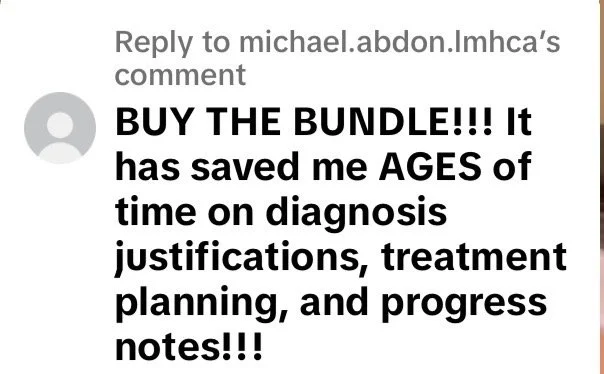
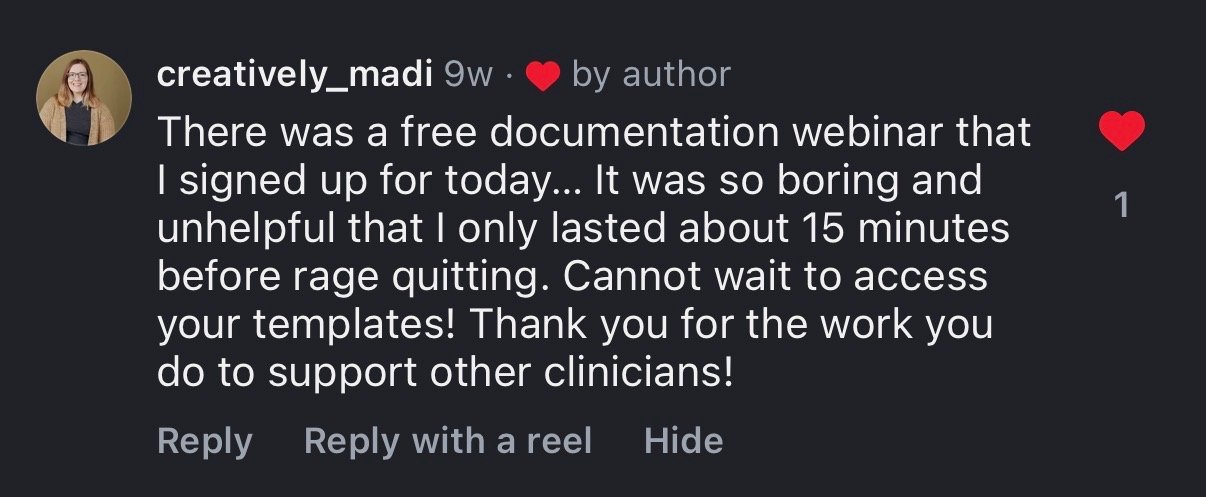
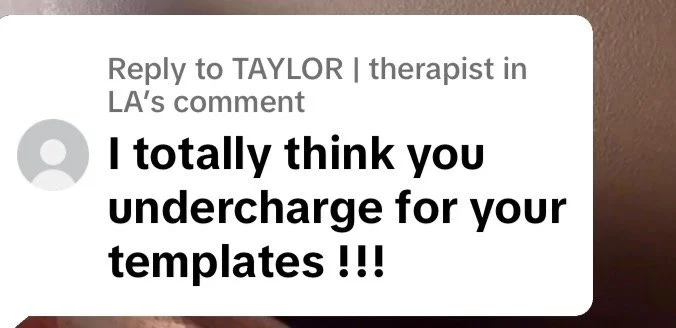
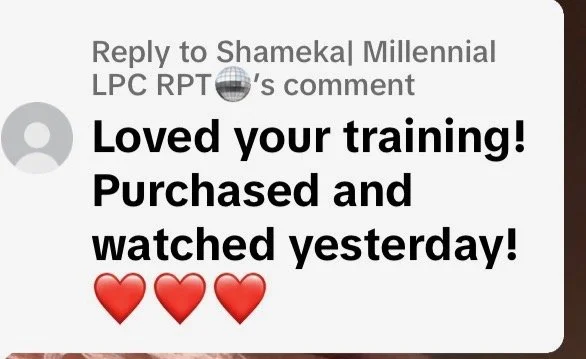
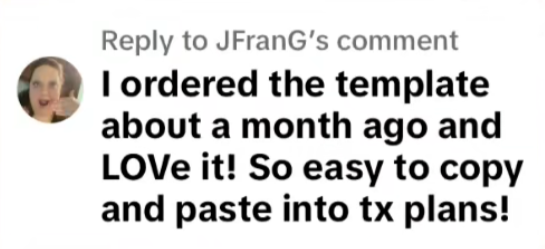
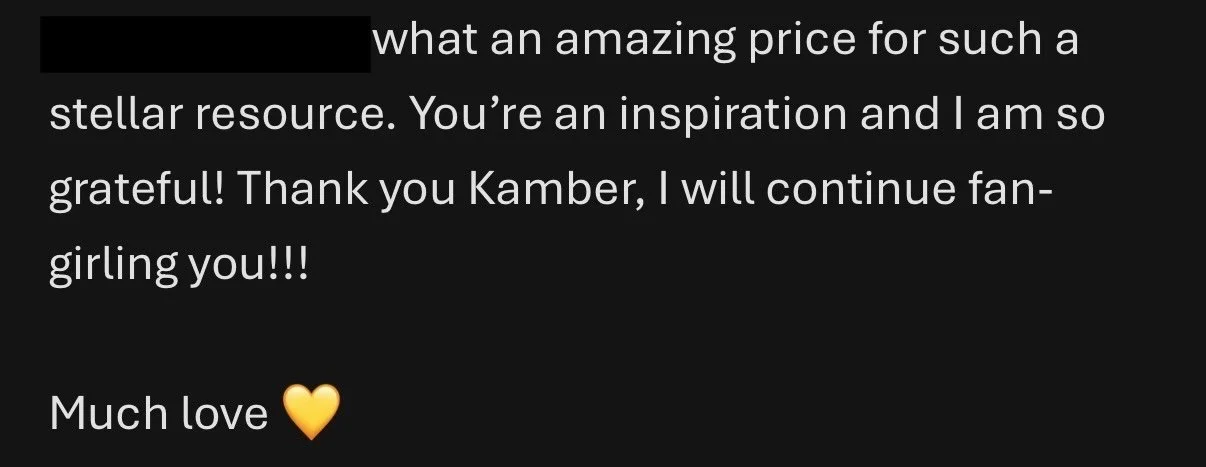
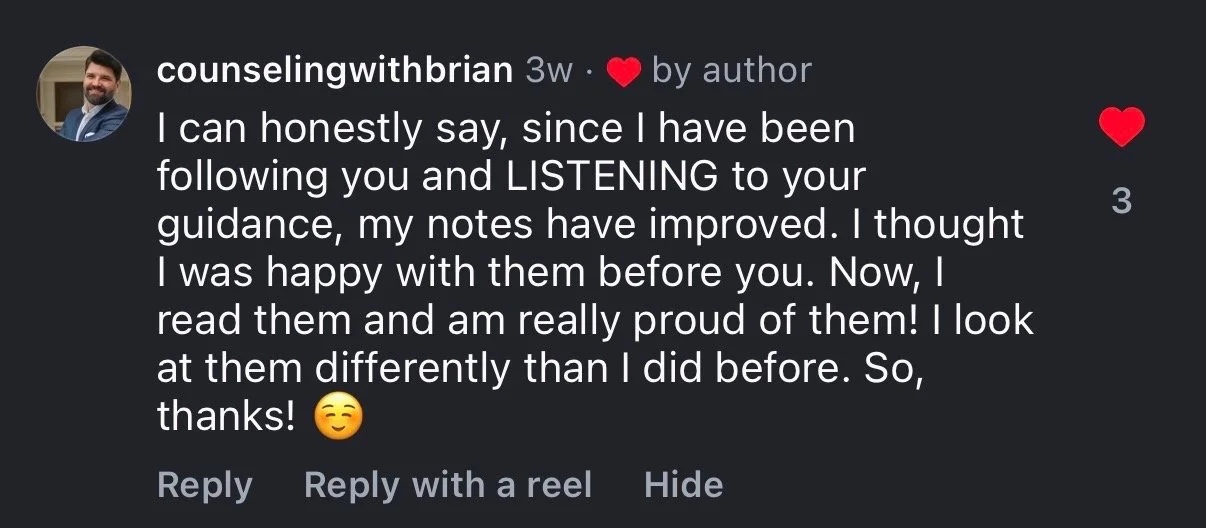
RECEIPTS FROM THERAPISTS
😭 💗







Compliant Notes.
*
Confident Clinicians.
*
Protected Practices.
*
Compliant Notes. * Confident Clinicians. * Protected Practices. *
Hi! I'm Kamber Peerboom, MBA, MSW, LICSW. Therapist, social worker, and certified compliance documentation freak.
I've spent the last 10 years teaching and training therapists on compliant clinical documentation, and somewhere along the way, I developed a pretty strong opinion that we've made this shit WAY more complicated than it needs to be.
And I'm not saying that just because I've written a lot of progress notes. LOL.
Throughout my career, I've managed group practices with more than 20 employees, overseen the opening of 35+ mental health clinics across the country, and spent an absolutely unreasonable amount of time navigating the administrative and compliance side of running a mental health practice.
I've reviewed hundreds of insurance contracts across countless payers, dug through Medicaid statutes and documentation requirements in more states than I care to remember, and worked with therapists and clinical leaders trying to make sense of what insurance companies actually expect.
So when I say I understand the documentation challenges facing group practices, I mean I've been in the fucking trenches.
I understand that clinical documentation is important. I also understand that most therapists didn't enter this profession because they have a burning passion for writing progress notes. And somewhere along the way, we've created a system where clinicians are spending hours on paperwork while practice owners are left wondering whether their team's documentation would survive an insurance audit.
And I think that's ridiculous.
That's why I started creating these resources. Because after a decade of training therapists, managing clinical operations, and trying to decipher insurance requirements, I've learned that so much of the confusion comes from how we're taught, not necessarily from the requirements themselves.
And frankly? I also have a pretty strong personal vendetta against insurance companies. They've made enough money off therapists, and I'd prefer we stop giving them opportunities to demand any of it back. LOL.
My goal is to make clinical documentation education approachable, practical, and actually useful, while giving therapists and practice owners the tools to create documentation that is compliant, consistent, and defensible.
Because I want your clinicians spending less time stressing about documentation, your practice feeling more confident about compliance, and insurance companies getting exactly zero unnecessary dollars back.

FAQs
-
Absolutely! The Clinical Documentation Template Library is designed to work with virtually any EHR system, so your practice can use the resources without changing the way your clinicians already document.
The library contains PDF resources that allow clinicians to copy fill-in-the-blank clinical documentation language directly from the library and paste it into the appropriate fields of their existing EHR. From there, they simply customize the language to reflect the client's individual presentation and the services provided.
Whether your practice uses structured documentation fields, SOAP notes, DAP notes, or narrative formats, the resources are designed to adapt to your existing workflow.
No new EHR. No complicated integrations. Just comprehensive documentation resources that work with the systems your team already uses.
-
Absolutely not! The Clinical Documentation Template Library was designed with the peace of mind of both group practice owners and solo practitioners in mind.
Whether you're responsible for the documentation of 30 therapists or just your own, the goal is the same: helping you feel confident that your clinical documentation is consistent, compliant, and defensible.
And if you're an individual therapist who doesn't own a practice but thinks these resources would make your life easier? You're more than welcome here, too. LOL.
-
My individual templates are designed to help clinicians document more efficiently while meeting applicable documentation requirements.
The Clinical Documentation Template Library takes that several steps further.
Rather than purchasing individual templates, you're getting access to a comprehensive system designed to support consistent, compliant, and defensible clinical documentation across your entire practice.
This includes diagnostic assessments, treatment plans, progress notes, completed examples, educational resources, and guidance on how these documents work together to support medical necessity and establish a clear clinical record.
The system is also maintained over time, with applicable resources updated as federal Medicare documentation standards evolve.
For group practices, it provides a standardized documentation framework that can be used across your clinical team.
Think of the individual templates as tools to improve your documentation. The Compliance System provides the framework, education, and ongoing resources to support your documentation practices as a whole.
As always, clinicians and organizations remain responsible for understanding additional state-specific, Medicaid, licensing, and payer requirements.
-
Once you complete your purchase, you'll automatically receive an email with instructions to set up your account and access the Clinical Documentation Template Library.
From there, you can log in and begin exploring the resources immediately.
If you're purchasing for a group practice, you'll also have access to an administrative dashboard where you can invite your therapists to join. Each team member receives their own invitation to create their login and access the library.
-
Absolutely! As your practice grows, you can upgrade to a subscription tier that accommodates additional clinicians.
Your practice administrator can manage team invitations, so adding new therapists to the library is simple. Each clinician receives their own login and access to the same resources.
-
Yes! You're welcome to cancel your subscription whenever you'd like. There are no long-term commitments beyond the billing period you've selected.
Your subscription provides access to the library while your membership is active. Once your access ends, you and your team will no longer have access to the library or its ongoing updates.
-
Yes! One of the biggest benefits of the subscription is ongoing access to updated resources.
I monitor changes to applicable federal Medicare documentation standards and update the library's resources as needed to reflect those changes.
That means your practice has access to a maintained documentation library rather than relying on templates purchased years ago that may no longer reflect current requirements.